Audiobooks, E-books, or Print: A Guide for Writers and Readers
If you have spent any time in online reading or writing spaces, you’ve probably heard this argument: “Audiobooks don’t count as real reading.”
It’s one of those surprisingly intense book debates, up there with “the book was better than the film” and whether it’s ever okay to dog-ear a page.
But, whether you’re a reader or a writer, your goal isn’t to win arguments about different book formats – it’s to read more and improve your craft. So instead of asking which format is “best,” let’s look at what each one actually offers.
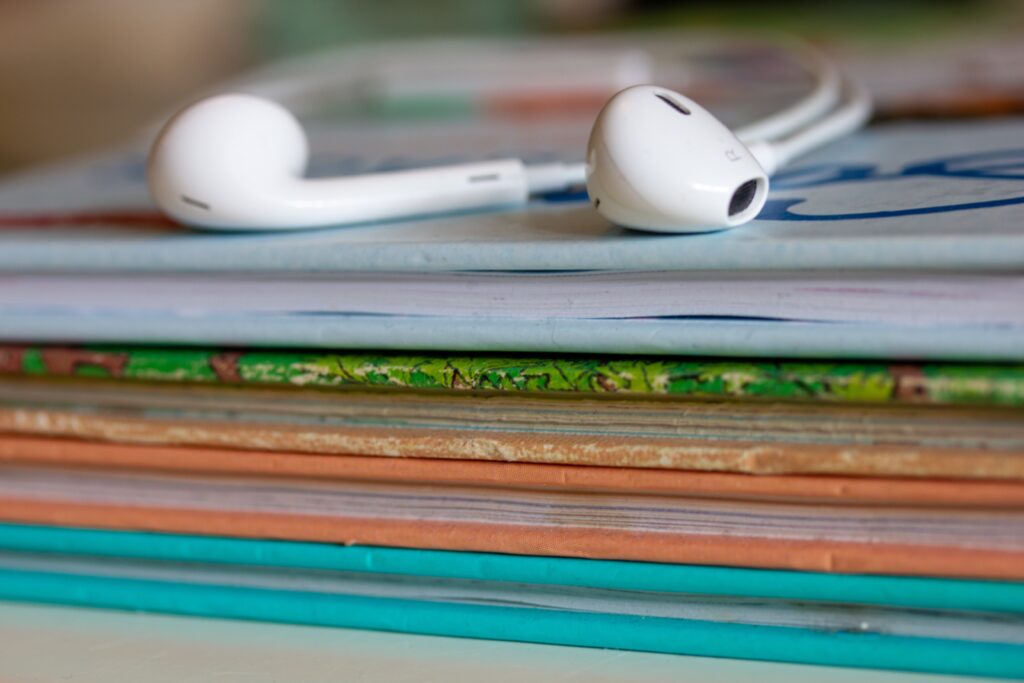
Audiobooks
To put it simply: yes, listening to audiobooks counts as reading.
The core of reading is about comprehending text. Your brain is doing the work, and it doesn’t particularly care whether the words arrive through your eyes or your ears.
One of the biggest advantages of audiobooks is their flexibility. You can listen whilst commuting, cooking, walking, or doing any kind of daily life admin. This opens up reading time you didn’t even realise you had. Audiobooks are also an important accessibility tool, supporting readers with dyslexia and visual impairments, making books available to a wider audience.
However, audiobooks can be expensive to produce, which means not every book gets one. For some readers, being unable to highlight passages or scribble notes on the page makes audiobook listening less than ideal, particularly in nonfiction genres, where the information may be more difficult to absorb. If I’m half-listening while doing the washing up, there’s a very real chance I’ll need to rewind because I’ve absorbed approximately… none of it. It’s not always the best format for deep focus or reflection.
Physical Books
For many readers, there is no greater feeling than a new physical book – cracking it open for the first time (gently, of course – no broken spines here), catching that ‘new book’ smell, and flipping each page as you slowly make your way to the end.
Physical books are great for annotation, highlighting and frequent referencing back and forth. This makes them particularly ideal for studying and revisiting.
However, printed books do come with environmental considerations, such as; paper use, printing, and shipping. All of it adds up, especially when purchasing from Amazon print on demand. See our previous blog where we look at this more in-depth: ‘Can the publishing industry ever be eco-friendly?’
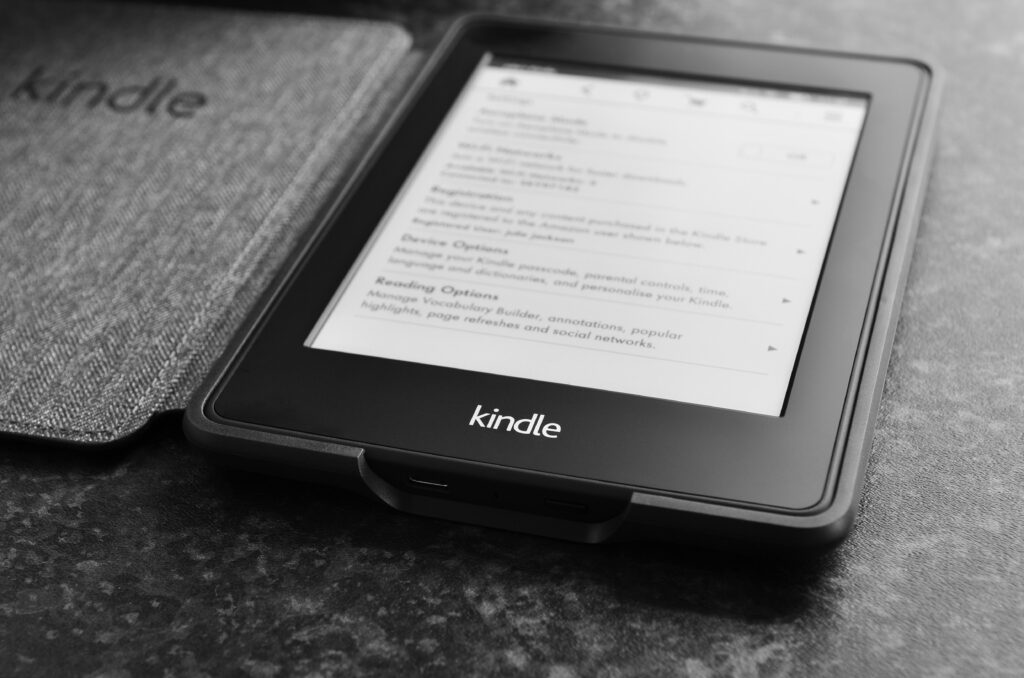
E-Books
E-books are probably the most practical option overall. You can carry an entire library on one device, adjust the font size or brightness when your eyes feel strained, and download a new release instantly.
They’re perfect for factoring reading into small pockets of time between your day, whether it’s commuting on public transport, lunch breaks, or whenever you have a few spare minutes.
Although, reading digitally isn’t for everyone. Some people just simply don’t enjoy reading on a screen, it doesn’t always have the same appeal as a physical book. The format also doesn’t work well for image-heavy illustration or highly designed books. If layout and visuals are a big part of the reading experience, e-books might not be the way to go.
A note for writers
If you’re writing a book, it’s worth thinking about format early on. Ideally, publishing in multiple formats can help you reach a wider audience and meet different readers’ needs.
That said, it’s not always straightforward. Producing an audiobook, for example,can be expensive, so it’s not always a realistic option.
Looking at the statistics, print still dominates book sales by making up 74% of the market globally. In 2025, around 46% of adults read physical books, compared to 24% for e-books and 23% for audiobooks.
What that really shows is that no single format covers everyone. Readers are spread across all three. The goal isn’t necessarily to do everything at once, it’s to prioritise what’s most feasible for you, while keeping in mind how different formats can expand your reach over time.
So… Which one is the best?
There is no single objective ‘best’ format. I would argue that the best format is the one that gets you to read.
Each one supports a different reading style. Many readers use a mix, listening on the go, reading digitally when out, and studying physical books at home. The idea that only one format ‘counts’ can hold readers back. If a particular format helps you read more and stay engaged, it’s the right one for you!
By Emily